Passing Through the Real
Artistic research project, Immersive Arts Space, Zurich University of the Arts, 2022.
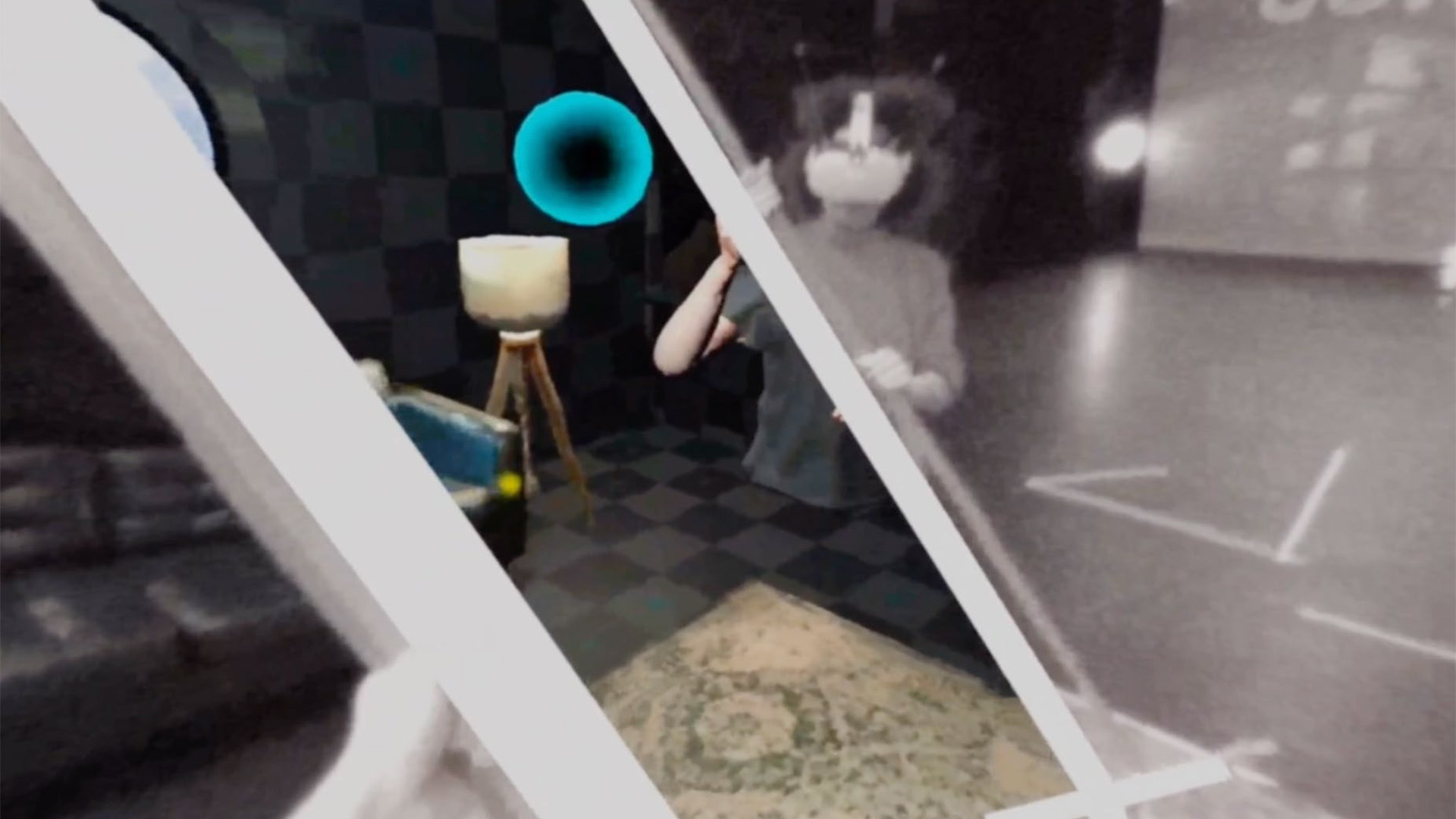
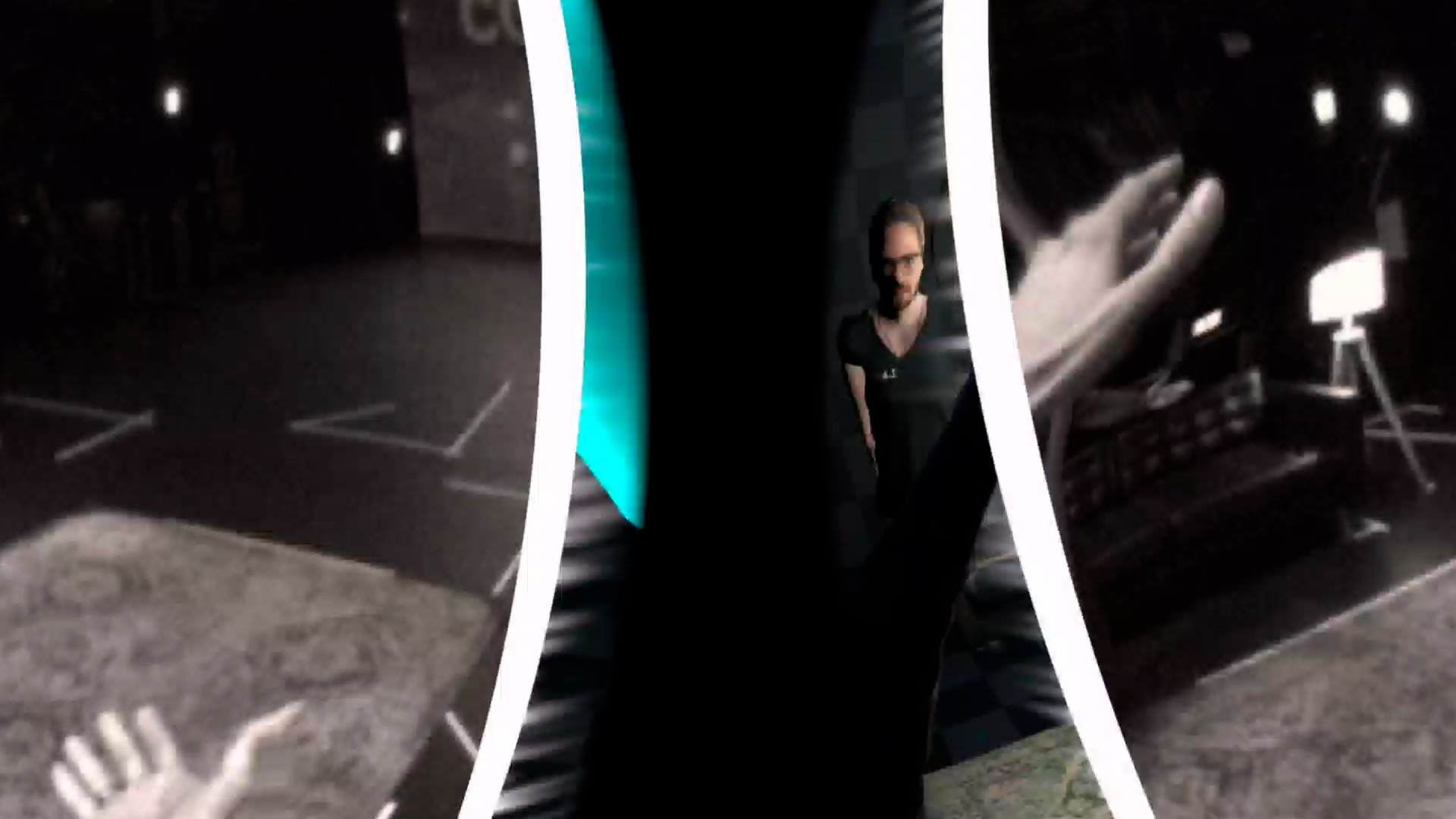
Users find themselves in an almost real black and white environment. But the world is grainy, distorted, and delayed. The overall atmosphere feels slightly off. Then, there is the portal. Passing through it leads to a fantasy world or back to the pseudo-reality they began in.
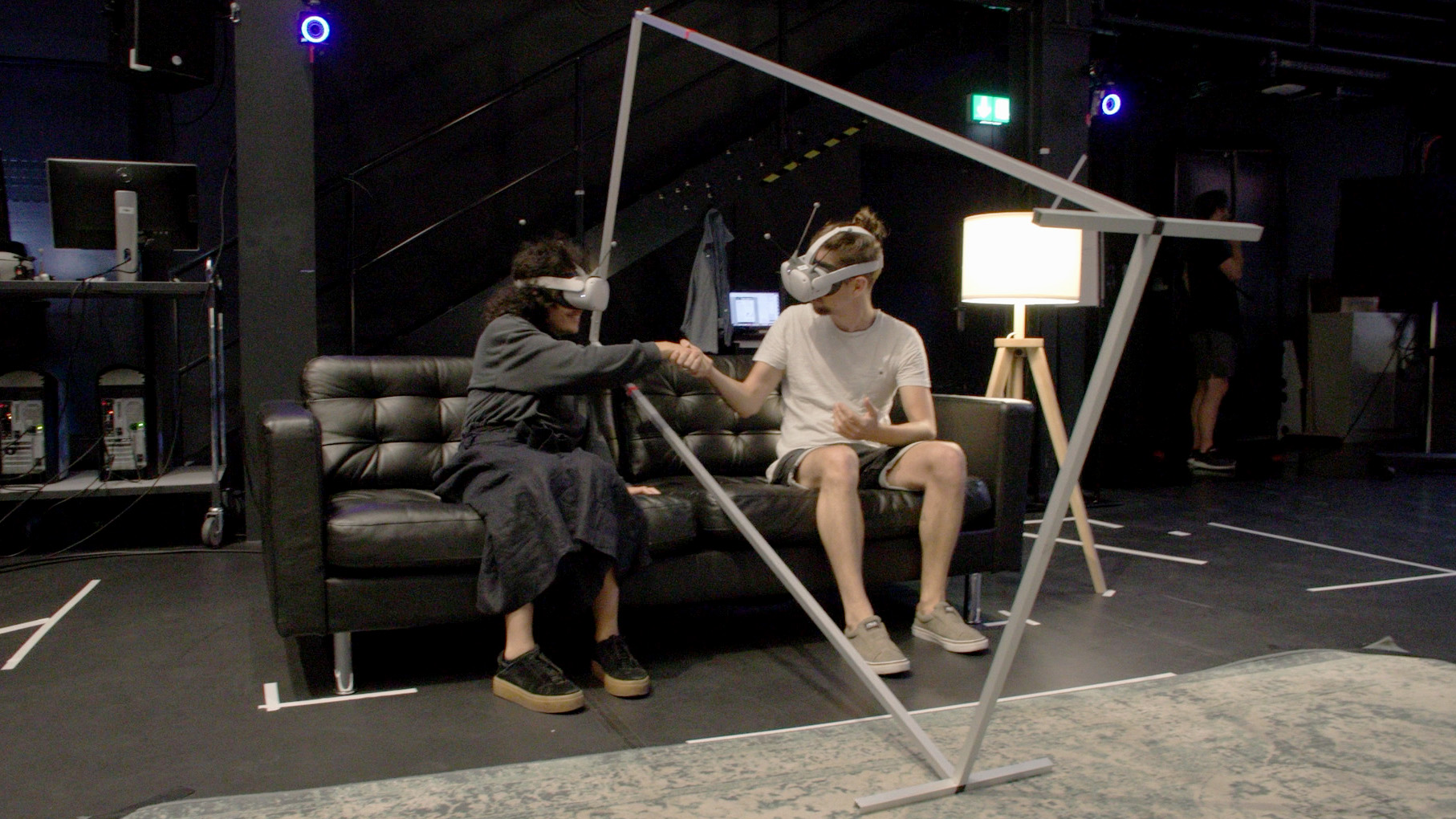
These experiences are partly built on scanned objects, a volumetrically captured human figure, and the passthrough feature of the Oculus Quest 2. The headset’s black-and-white camera streams the user’s real surroundings, which can be selectively integrated into the virtual world through doors or windows. The passthrough’s appearance can be modified with filters, color shifts, or contrast adjustments. Visitors see each other as a neural-generated 3D avatar reconstruction of the experience’s creator. Haptic feedback plays a key role: touchable objects must precisely match their digital counterparts. While the sofa is fixed, the physicaly existing portal can be moved. Users can also feel each other’s presence through shared gestures: handshakes, shoulder taps, or playful interaction, all inside this layered virtual world.